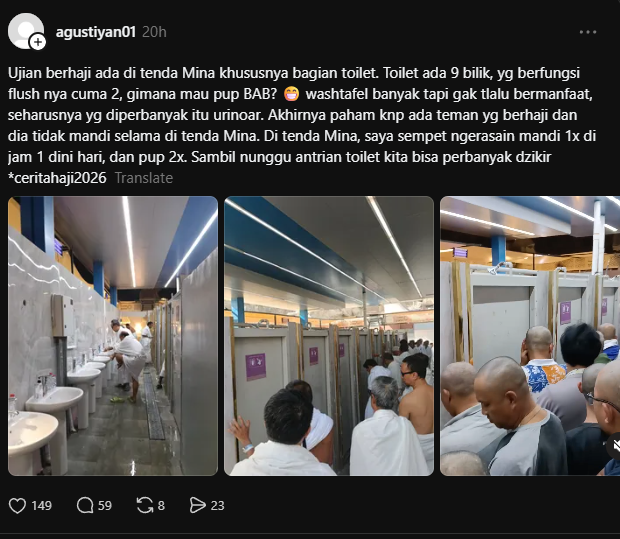
Cubicle availability
"When several cubicles are inactive, the queue can become the real bottleneck."
Taysir for Hajj & Umrah
Taysir uses IoT sensing and practical AI to help pilgrims see better restroom options while operators monitor queues, inactive cubicles, and overflow needs in near real time.
Why It Matters
A toilet area may look full because the queue is long, but the real issue could be inactive cubicles, uneven movement, or a better public restroom option nearby. Taysir gives operators and pilgrims a clearer picture before the crowd gets worse.
Reported pain points
Cubicle availability
"When several cubicles are inactive, the queue can become the real bottleneck."
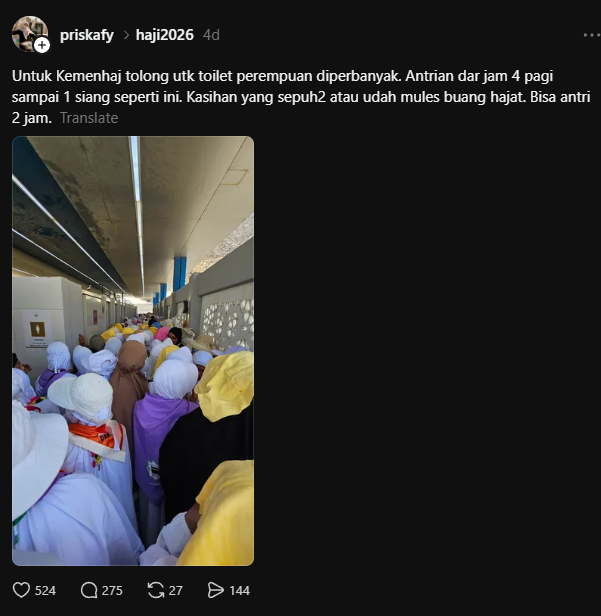
Women restroom queue
"Women's restroom queues may become especially difficult for elderly or unwell pilgrims."
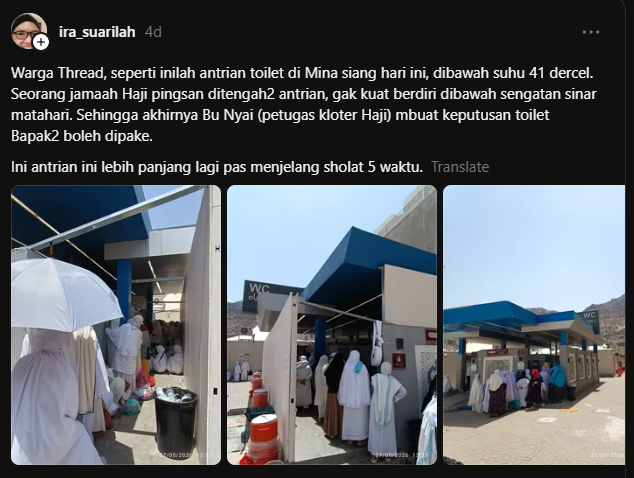
Heat and waiting time
"Long waits under hot conditions can increase fatigue and operational risk."
How Taysir Helps
Taysir combines IoT sensors, queue visibility, cubicle status, and AI-assisted flow analysis to help pilgrims choose better options and help operators act faster.
01 IoT sensing
IoT sensing helps read queue activity and cubicle availability so operators can see which restroom areas are starting to slow down.
02 AI-assisted analysis
AI-assisted analysis turns facility signals into crowd levels, wait estimates, inactive cubicle alerts, and overflow indicators.
03 Practical guidance
Pilgrims and operators get practical guidance based on current facility conditions, available restrooms, and changing crowd pressure.
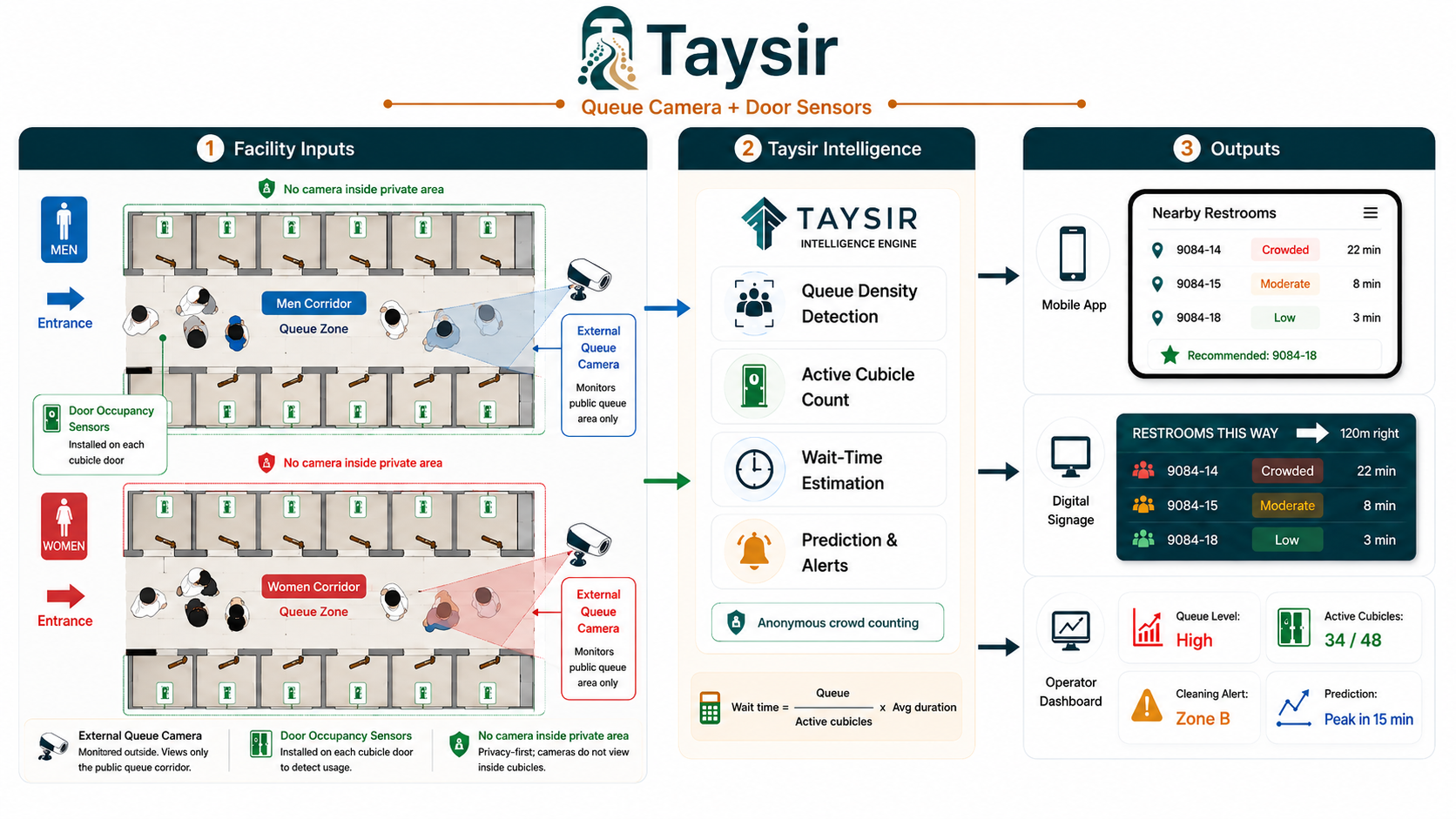
System map
Queue activity, cubicle use, male/female restroom areas, and public bathroom options become wait estimates, guidance, and operator alerts.
Facility Rules
Taysir can separate male and female restroom areas, show mapped toilet locations, and include public bathrooms when they are available as alternatives.
Male and female restroom areas are shown and recommended separately, so guidance follows the layout of the actual site.
Each restroom can appear on the map with its current crowd level, cubicle status, and estimated waiting condition.
When public or shared toilets are available, Taysir can show them as alternatives instead of sending people blindly through crowded paths.
Operators can decide which facilities are visible, temporarily unavailable, shared, or suitable for overflow guidance.
Responsible Sensing
No cameras inside cubicles
No facial recognition
No identity tracking
Anonymous restroom flow data
Product surfaces
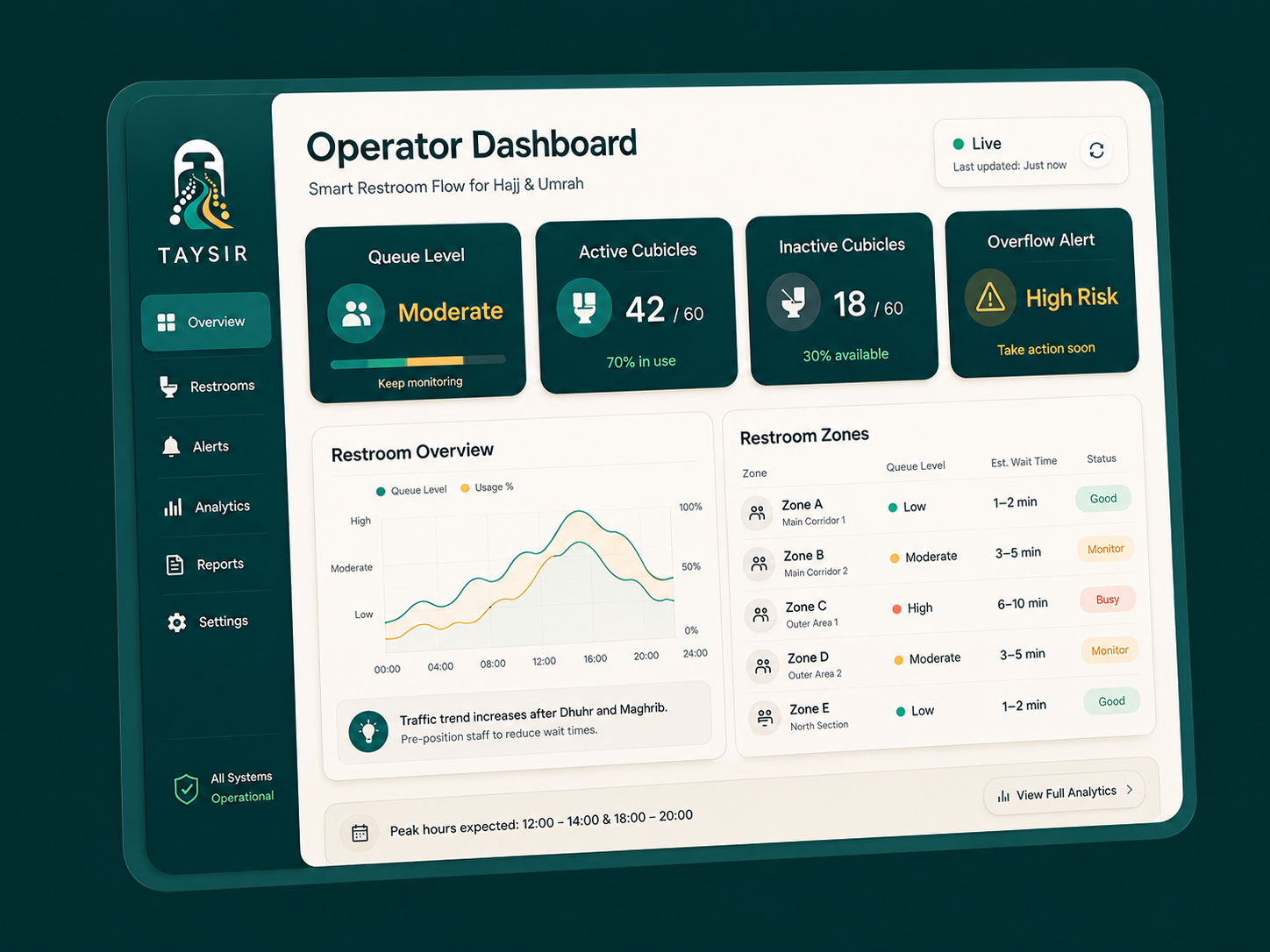
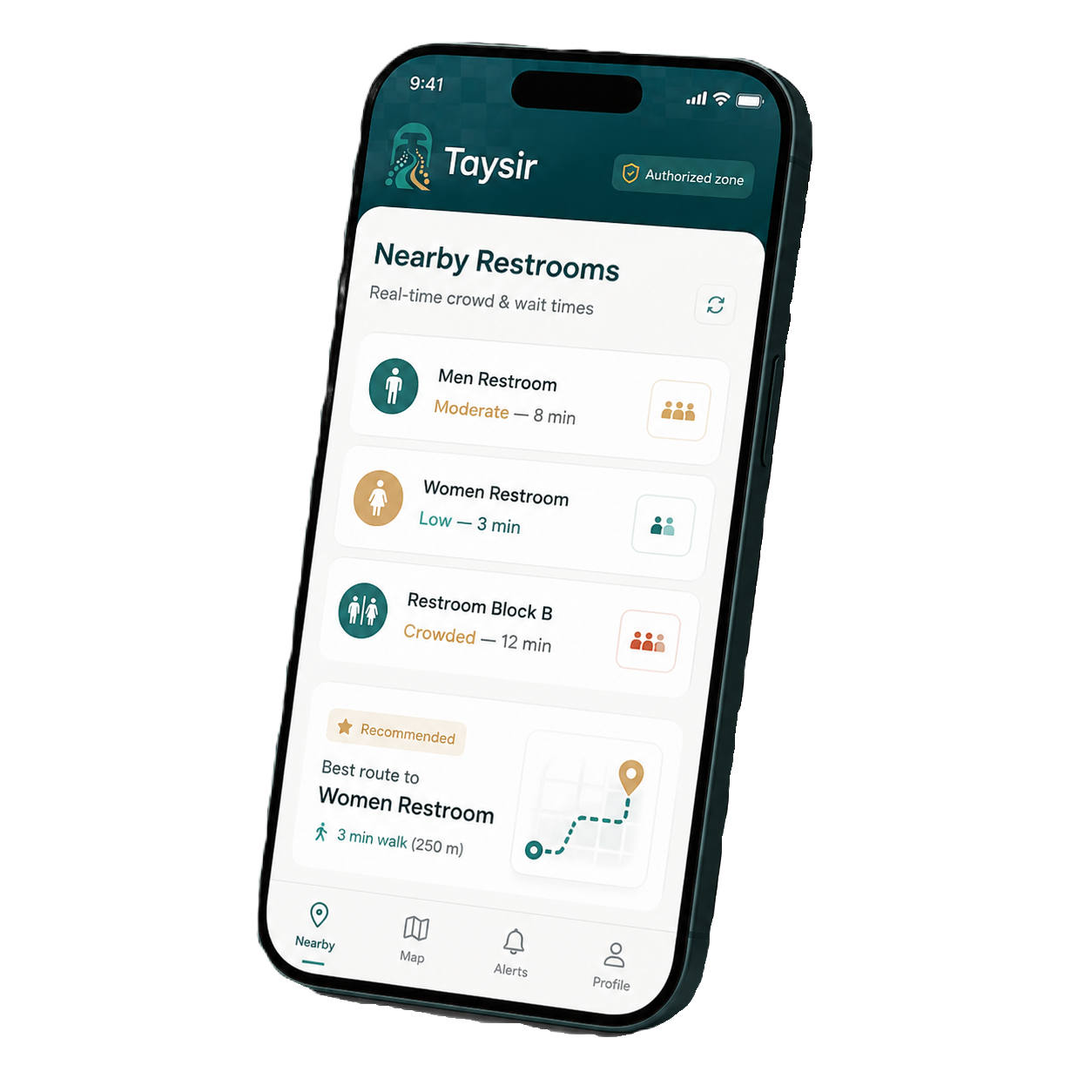
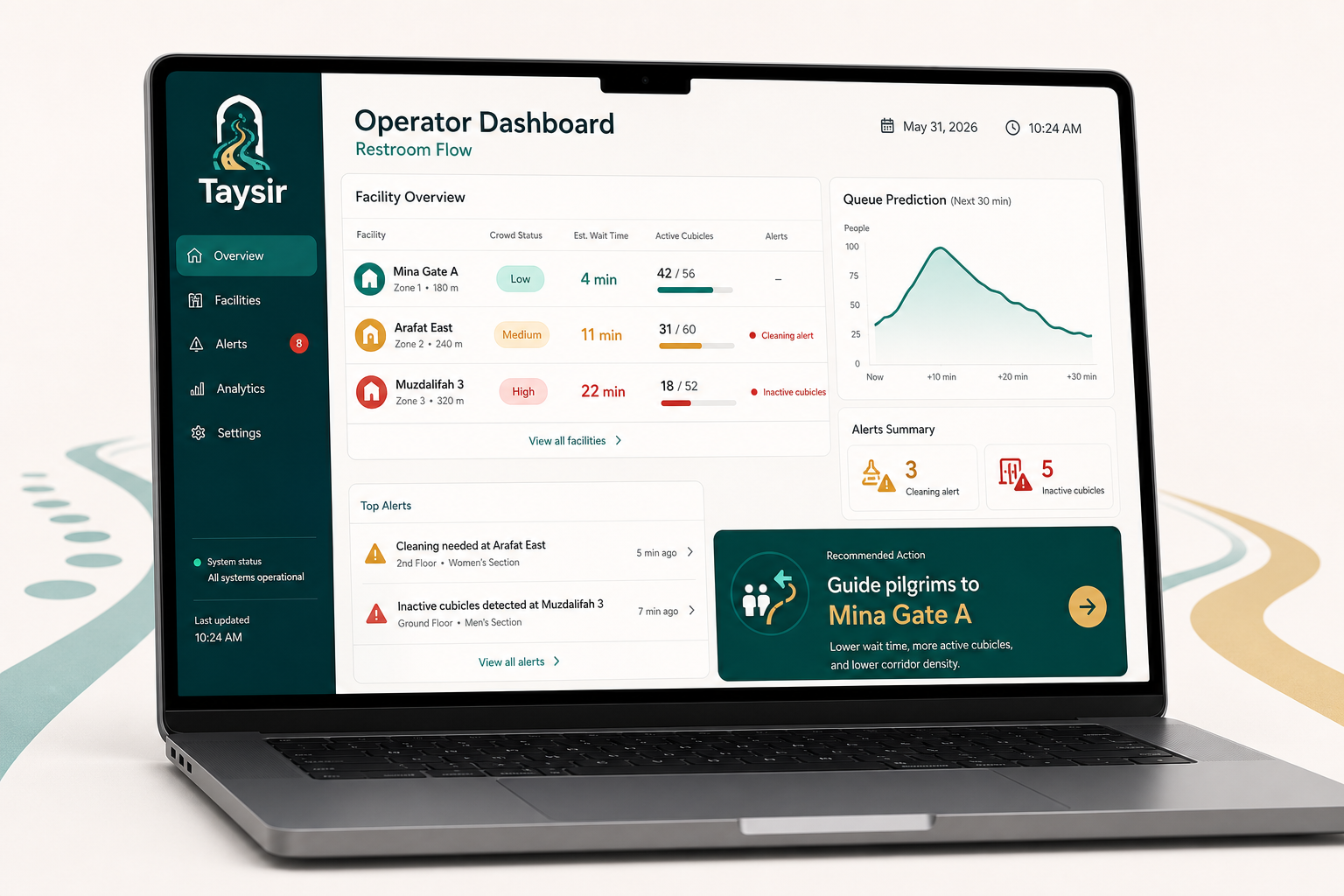
Pilgrims get guidance to available male/female restrooms, while operators see where lines are slowing, which cubicles are inactive, and when overflow access may be needed.
Pilgrim guidance
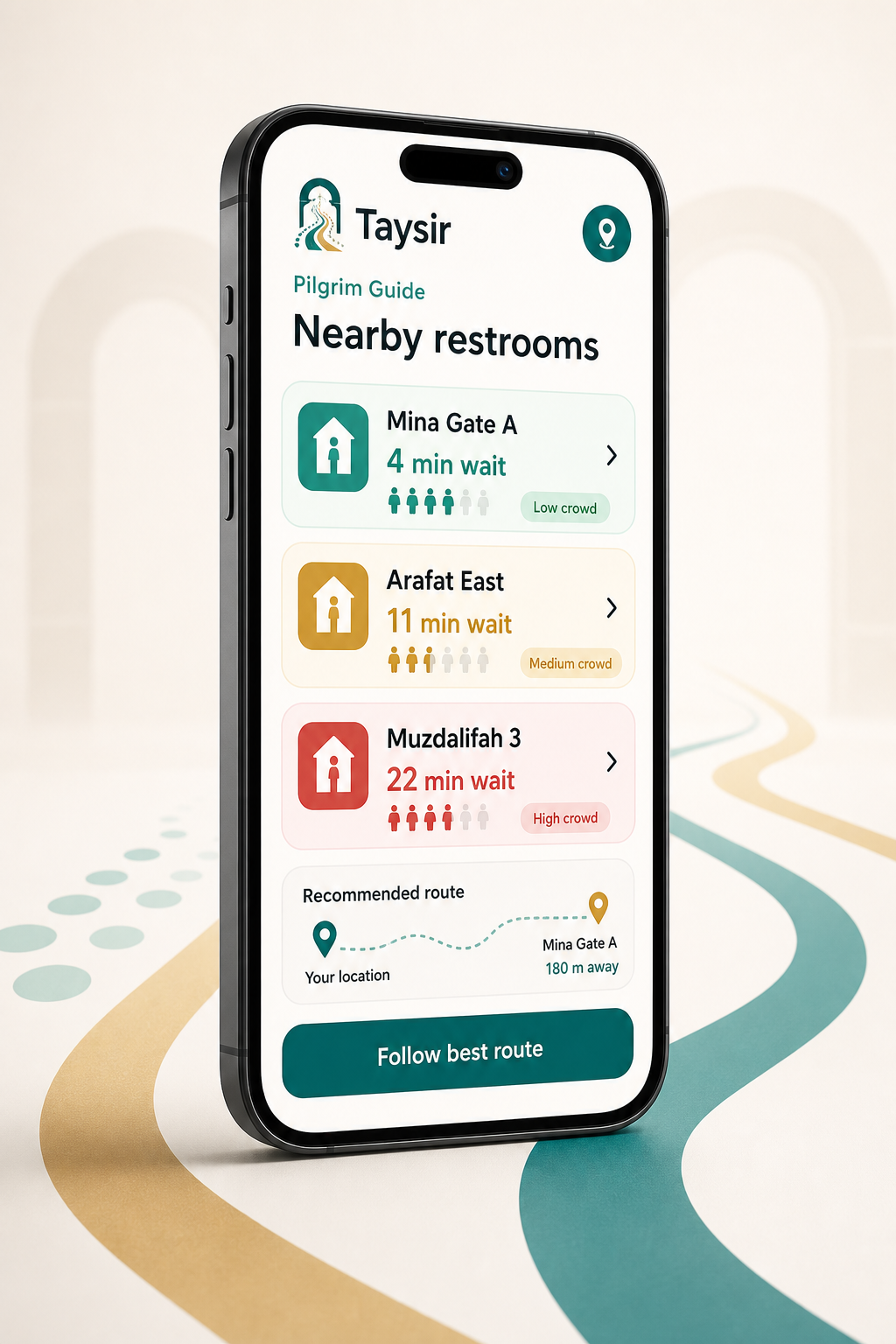
Operator command view
Not App-Only
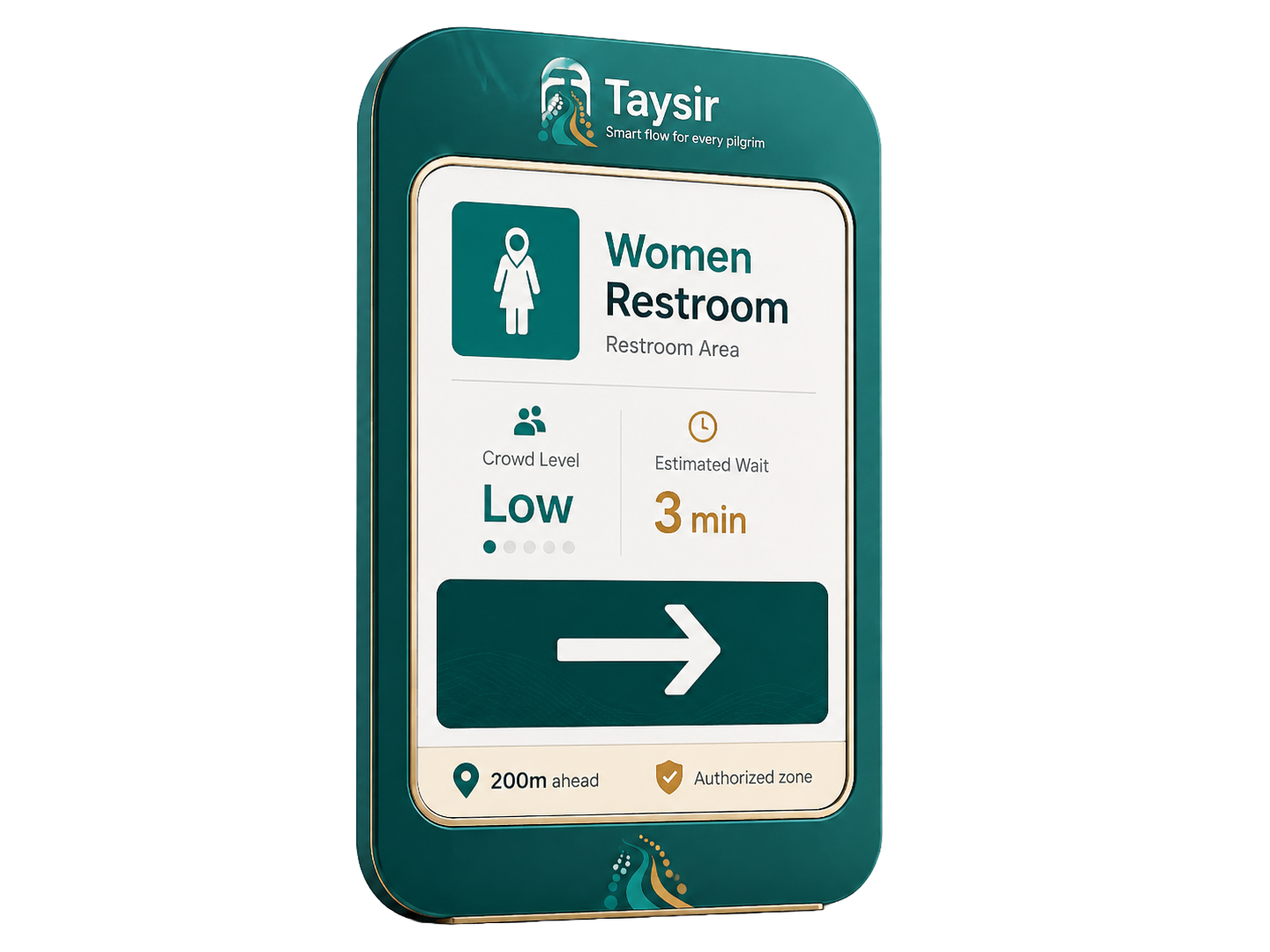
Many pilgrims may never open an app during peak movement. Taysir is built to surface guidance through signage, dashboards, and mobile channels.
Digital signage near restroom paths
Operator dashboard for facility teams
Mobile guidance for pilgrims who use the app
Alerts for cleaning, inactive cubicles, and overflow decisions
Beyond Restrooms
Restrooms are the first use case because the problem is clear and frequent. The same visibility and guidance concept can help operators understand queues, availability, and support needs across other crowded pilgrim facilities.